NexCap · Human data standard
Turning human behaviour into synchronised, structured, trainable data.
A full-body multimodal capture system that records motion, mechanics, touch, neuromuscular and physiological signals in real interaction.
- Synchronised channels
- 200+
- Temporal sync precision
- 0.1 ms
- Raw throughput per day
- 1 TB+
- Modalities, modular
- 60+
Explore the system
Five modes, one human data standard.
Full-body coverage, modular sensor capture, a traceable data pipeline, structured output and real interaction — translated directly from the Nexara system design.
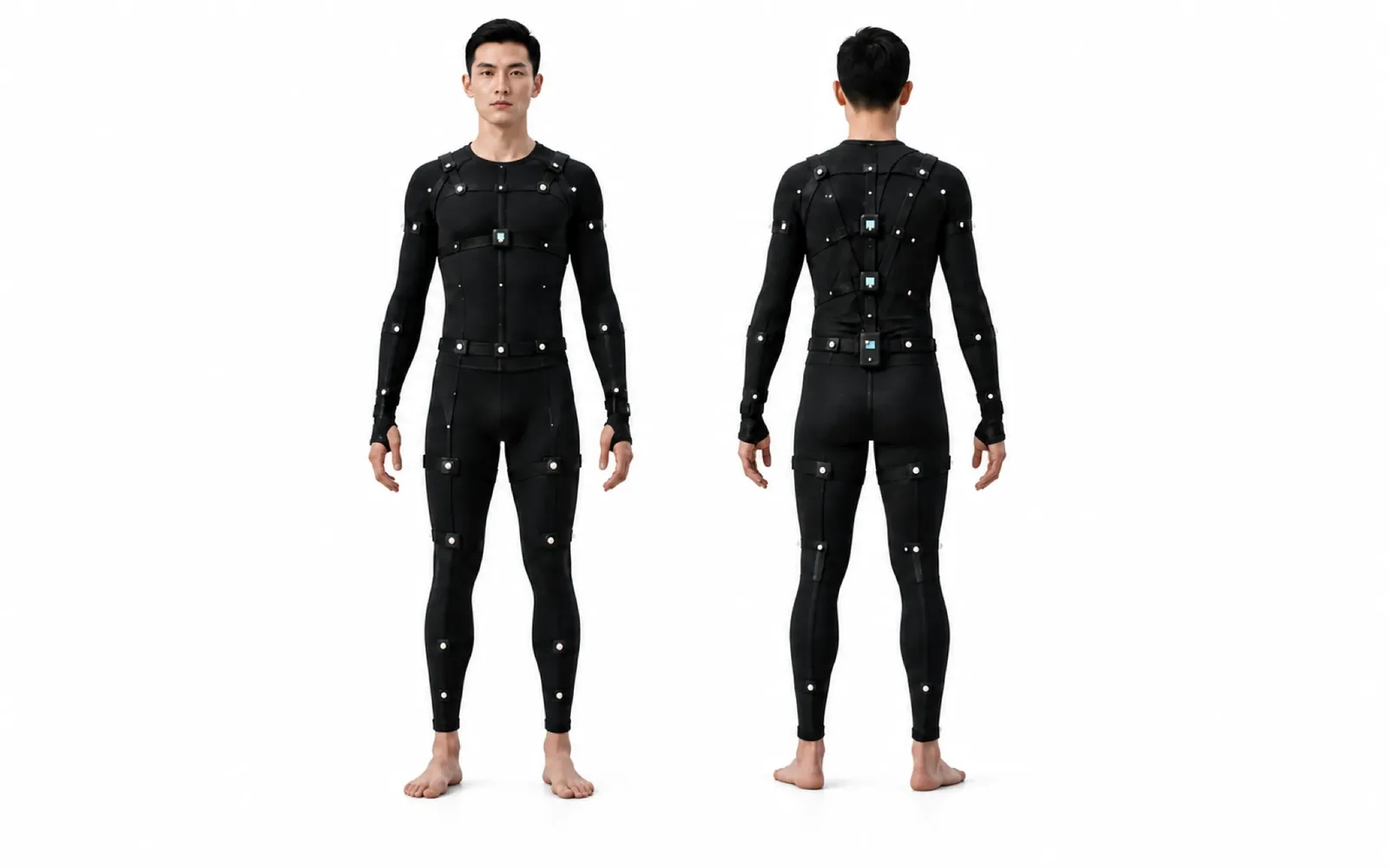
01 / Full Body Coverage
One system covers the whole body
Front-and-back capture garments and external devices record motion, force, physiology and interaction together.
- Head & torso
- Gaze / expression / IMU / respiration
- Hands & contact
- Tactile array / six-axis force / position
- Muscle & physiology
- sEMG / heart rate / EDA / temperature
- Lower body & sole
- Gait / pressure distribution / force
Full coverage, high-precision synchronisation, wireless capture and live preview.
02 / Sensor Matrix
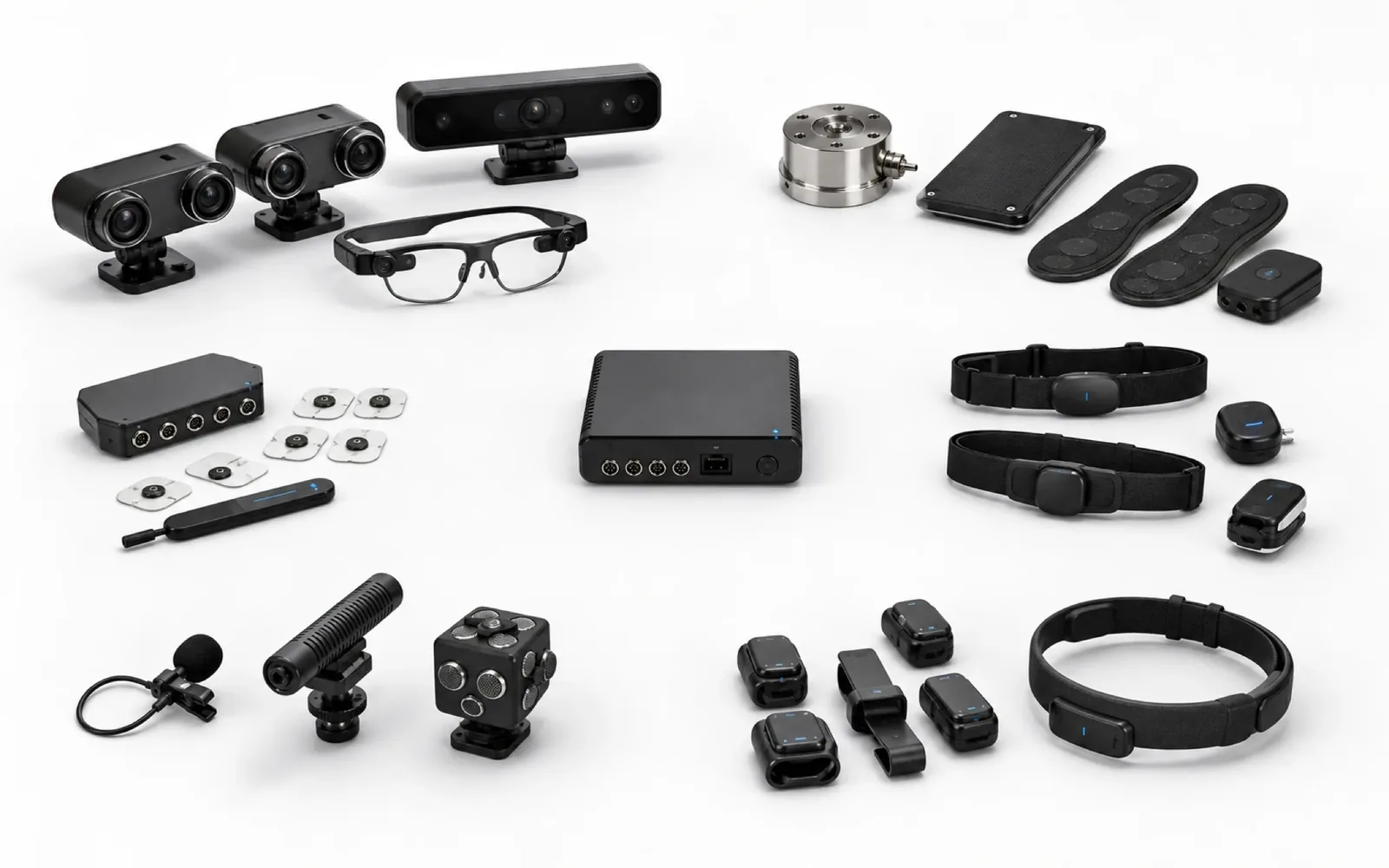
Six modality families, combined on demand
The system is modular. Modalities are added or removed by task, body region and capture duration.
- Vision & motion
- Optical mocap / depth / gaze / skeleton / IMU / velocity
- Force & contact
- Six-axis force / pressure array / force plate / torque
- Muscle & neural
- sEMG / activation / muscle synergy / neural stimulation
- Physiology & affect
- ECG / HRV / respiration / EDA / SpO₂ / temperature / arousal
- Voice & audition
- Speech features / microphone array / source localisation
- Cognition & behaviour
- Gaze / attention / cognitive load / response time / social context
More than 200 synchronised channels across over 60 data modalities.
03 / Data Pipeline
Ready for training when capture ends
Time, space, task and version relationships are preserved from capture, reducing information loss in post-processing.
- Unified time and space
- Every modality calibrated to shared coordinates
- Quality control
- Automatic detection of anomalies, drops and drift
- Traceable versions
- Data, labels and training records remain linked
The Human Foundation Dataset supports both model training and evaluation ground truth.
- 01
Synchronised capture
Multimodal / one clock
- 02
Data calibration
Time / space
- 03
Denoise & repair
Anomalies / dropped frames
- 04
Annotate & segment
Tasks / events aligned
- 05
Version & store
Traceable data assets
04 / Structured Output
A complete human state on one timeline
Motion, contact, muscle, physiology, voice and cognitive data are accessible through one interface.
- Engineering-ready
- Unified format, units, coordinates and quality labels
- Training-ready
- Searchable by action, event and interaction segment
- Evaluation-ready
- The same capture establishes biofidelity ground truth
The data describes not only what happened, but how force and sensation moved through the body.
Motion & pose
3D joints / mesh / trajectory / velocity
Contact & mechanics
Pressure distribution / force vectors / torque
Muscle & neural
Activation levels / muscle synergy
Physiology & affect
HRV / respiration / EDA / arousal
Voice & audition
Speech features / sound-source localisation
Cognition & behaviour
Attention / load / response time
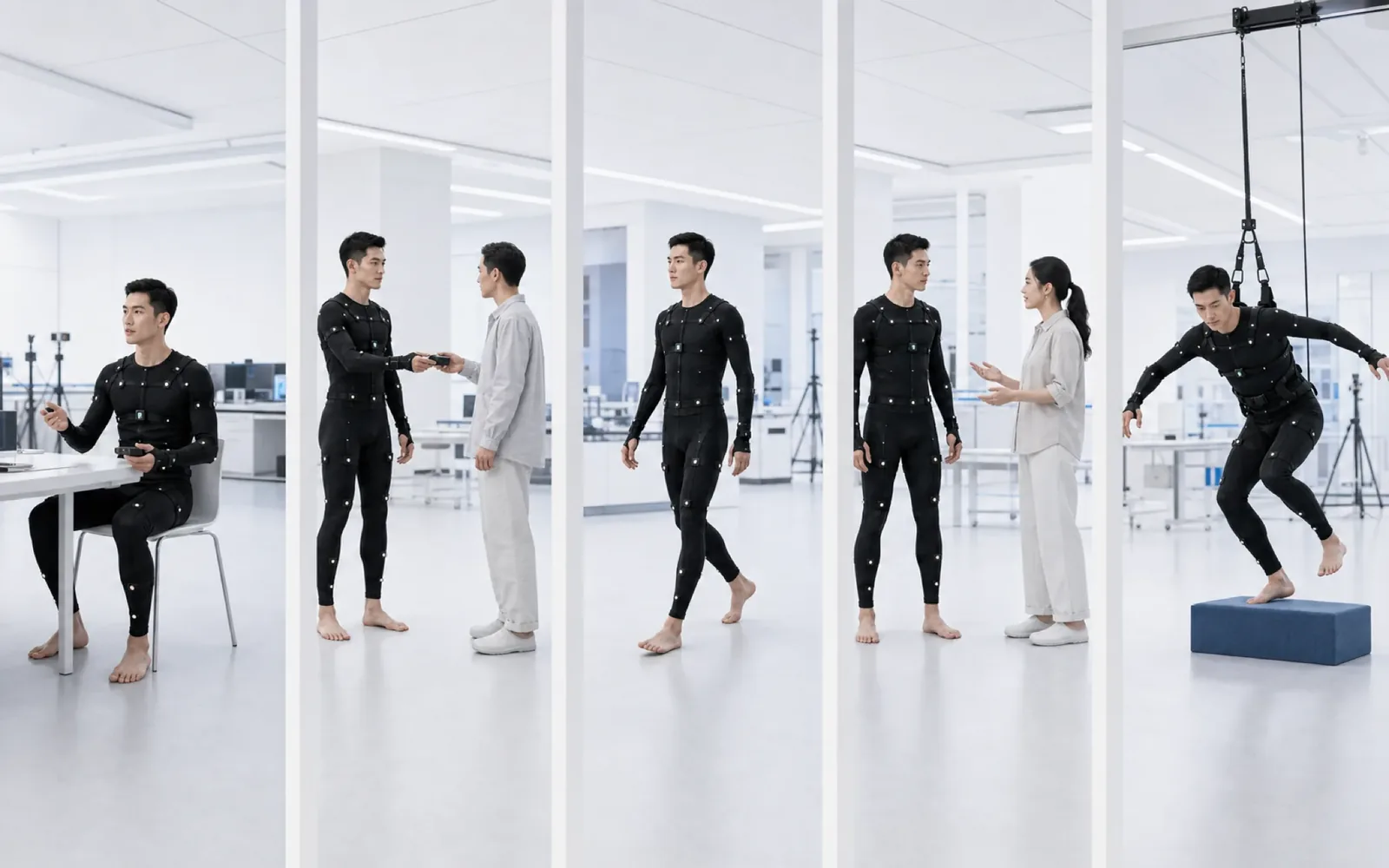
05 / Real Interaction
Captured inside real relationships
Scenes cover continuous interaction between people, objects, bodies and environments rather than isolated motion.
- Everyday interaction
- Natural movement and daily tasks
- Contact collaboration
- Passing / supporting / joint operation
- Locomotion & gait
- Walking / turning / balance change
- Affect & social
- Expression / prosody / social distance
- Limit perturbation
- Fatigue / sudden force / loss of balance
Real scenes teach the intent, boundaries and feedback behind movement.
Downstream
Human Foundation Dataset
Real human data is calibrated, repaired, annotated and versioned into the Human Foundation Dataset, which supports Human Foundation Model training and evaluation.